LNG Disruption Confirms Real Risk
Previously, I wrote that the next energy crisis was unlikely to be driven by oil, but by gas. Events over the last few days in the Middle East are confirming that view.
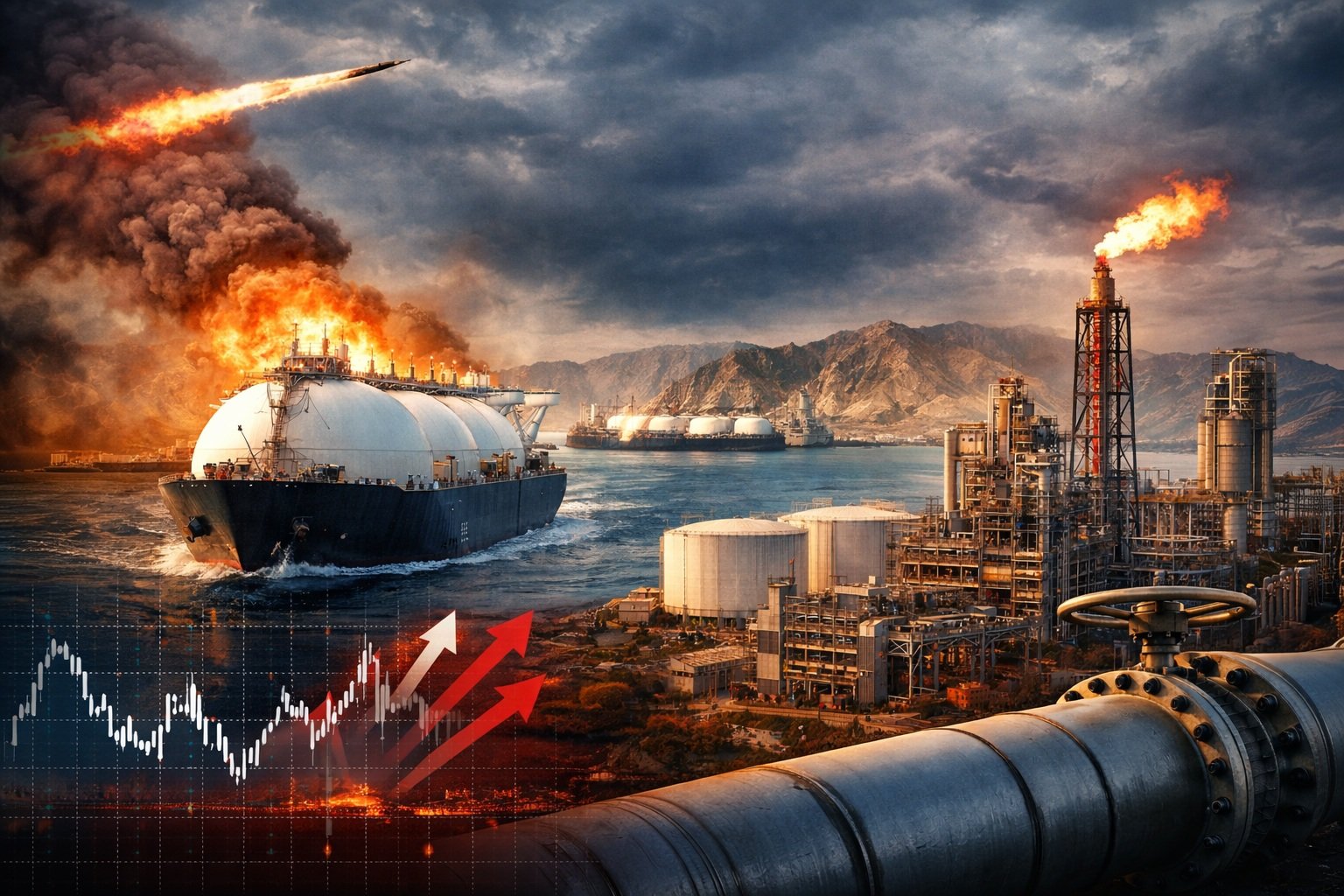
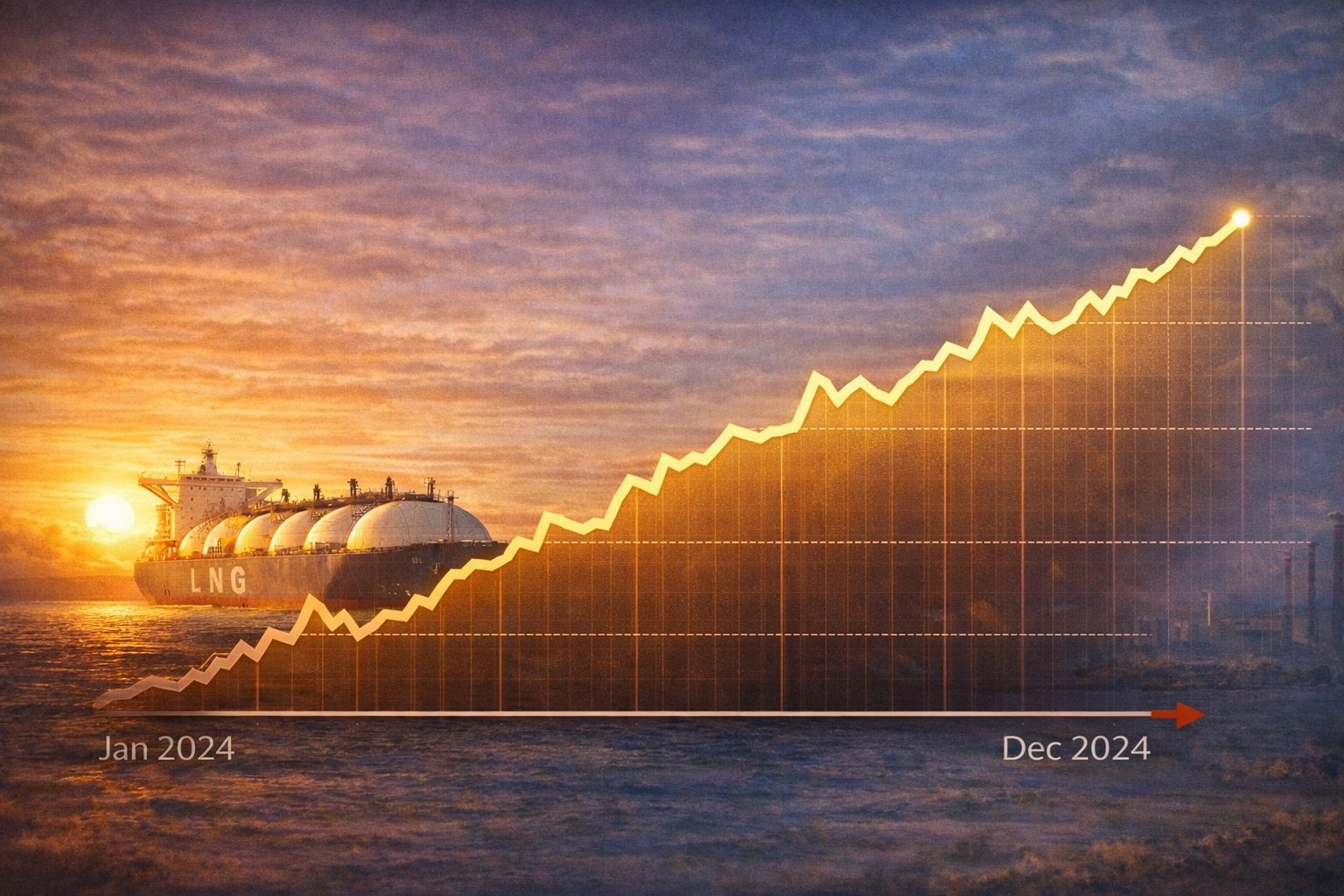
Following attacks affecting gas infrastructure in the Gulf region, including disruption to Qatari LNG supply, gas prices have risen sharply again. Electricity prices have followed, as they often do in Europe, because gas remains the marginal fuel that sets the price of power.
There has also been renewed concern about the Strait of Hormuz, through which a significant share of global oil supply passes. Oil prices reacted quickly to the threat, but have also shown how rapidly they can move in both directions as the situation changes. For example, on 9th March, there was a $35/barrel oil swing, falling from $119/barrel to $84/barrel in a single session, marking crude oil’s biggest intraday swing in dollar terms on record.
This highlights an important distinction.
Oil markets are global, deep, and relatively flexible. Gas markets, particularly LNG, depend on a smaller number of processing plants, export terminals and shipping routes. Damage to one part of that chain can affect supply much more quickly than an equivalent disruption in oil.
That is why recent attacks on gas infrastructure have had such a strong impact on prices, even though there is no immediate shortage of energy in Europe.
The vulnerability isn’t the amount of gas in the ground. It’s the difficulty of extracting, processing, and distributing it globally.
Over the past few years, Europe has reduced its reliance on Russian pipeline gas, but this has been replaced with a greater dependence on imported LNG, particularly from the United States and Qatar. Norway supplies Europe with 30% of its gas needs, but this is via pipelines, rather than as LNG.
Norway is already supplying close to maximum capacity, leaving LNG as the main balancing source of supply when markets tighten.
This has created a system that, whilst more flexible than before, is more sensitive to geopolitical events.
It is also worth noting how interconnected the LNG market has become. For example, the Golden Pass LNG export terminal on the U.S. Gulf Coast, one of the major new projects expected to supply global markets, is 70% owned by QatarEnergy and 30% by ExxonMobil. QatarEnergy may lose revenue from disruption at its Ras Laffan complex; however, increased demand for U.S. LNG exports could partly offset this, given its ownership stake in Golden Pass.
In other words, the same global LNG infrastructure that Europe increasingly depends on is closely linked to the same region currently at the centre of geopolitical tension.
None of this means there is an immediate shortage of gas in Europe today.
However, storage levels are lower than usual for this time of year, and any prolonged disruption to LNG supply makes it more difficult for Europe to refill reserves ahead of next winter. When that happens, prices tend to move long before any physical shortage appears.
For businesses, the key point is not to panic, but also not to assume that prices will automatically fall back to previous levels once the headlines fade.
The real risk in the current market is not oil. It is gas.
And the recent attacks on LNG infrastructure are a reminder of how sensitive that system has become.