The Next Energy Crisis Won’t Be Oil
For decades, energy crises were defined by oil. Tankers in the Strait of Hormuz, embargoes from OPEC, and price spikes in Brent Crude dominated headlines.
But the structure of the global energy system has changed. The vulnerability today isn’t oil. It is gas.
And more specifically, liquefied natural gas (LNG) infrastructure and shipping routes.
Events unfolding this week in the Middle East illustrate exactly why.
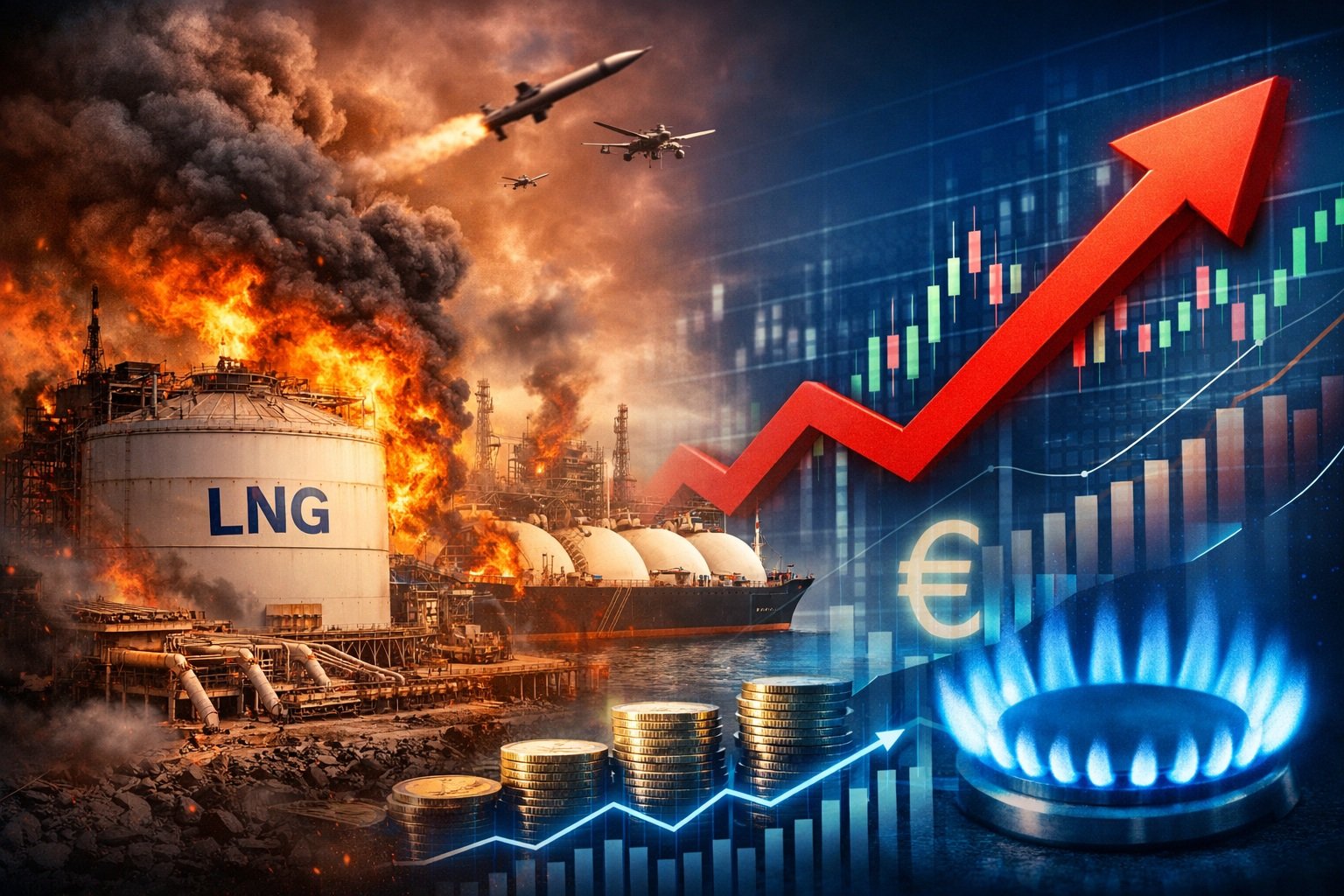
An attack disrupted 20% of global LNG trade
Following Iranian strikes on LNG facilities in Qatar, the state energy company QatarEnergy halted LNG production and declared force majeure on shipments.
Qatar is not just another producer. It accounts for roughly one-fifth of global LNG exports, making its Ras Laffan complex the most important gas export hub in the world. Within hours:
- European gas prices surged sharply
- LNG shipping routes through the Strait of Hormuz stalled
- Insurers began withdrawing war-risk coverage for vessels in the region
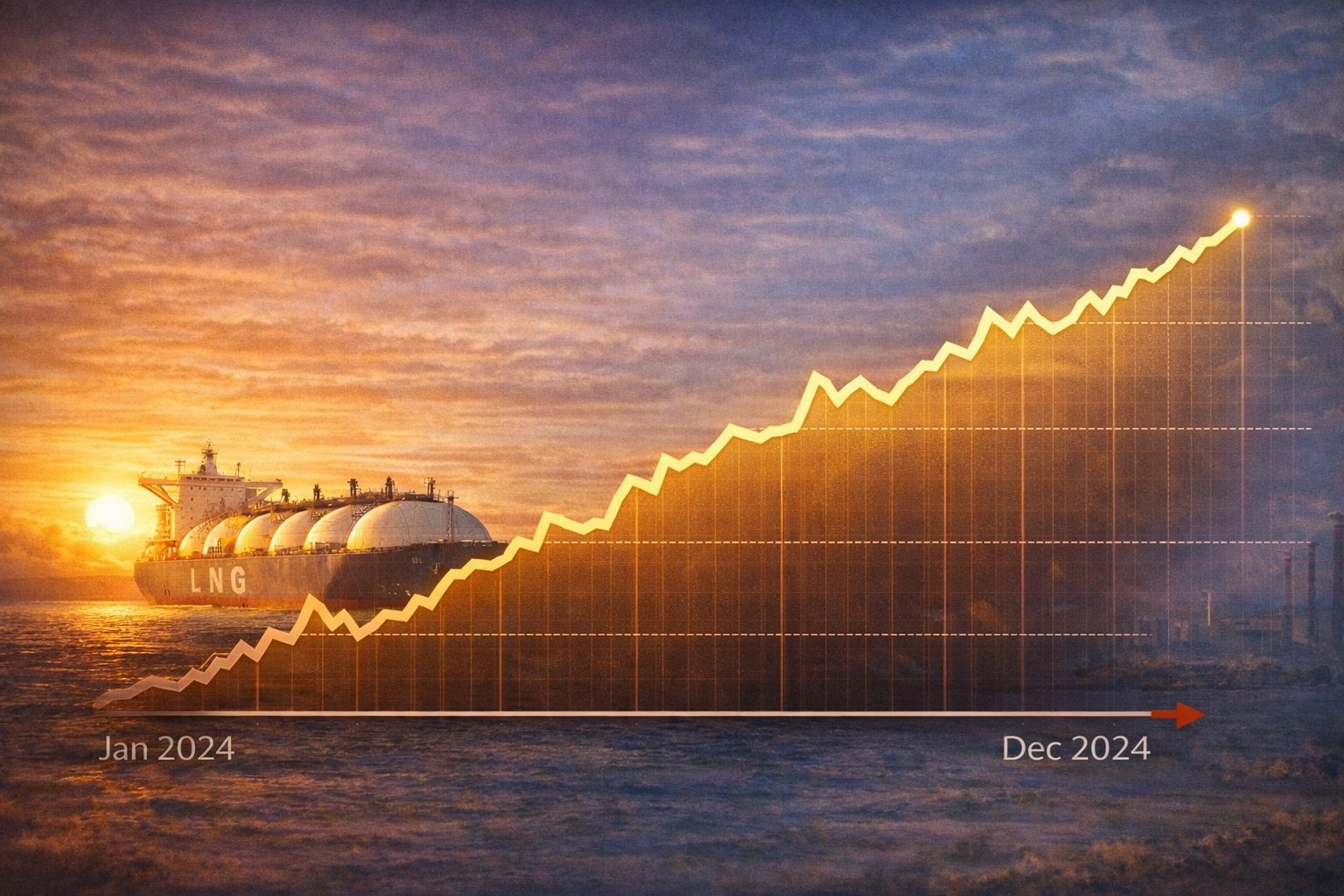
European benchmark gas prices rose dramatically as markets reacted to the sudden loss of supply. This is the kind of disruption oil markets have learned to absorb, but gas markets have not. The big winners? US LNG companies, as they look to become the main suppliers to the E.U.
Why oil markets are now resilient
Oil markets have become surprisingly robust. Supply is diversified across multiple producers:
- United States (shale)
- Saudi Arabia
- Russia
- Canada
- Iran
Add to that:
- strategic petroleum reserves
- flexible tanker markets
- deep financial hedging markets.
Even when geopolitical tensions spike, oil supply can usually adjust.
Gas markets are structurally fragile
Gas is different. Unlike oil, gas requires specialised infrastructure at every stage:
- Liquefaction plants
- LNG tankers
- Shipping routes
- Regasification terminals
- Storage facilities
Disrupt any one of these and supply tightens immediately. That is why the strike on Qatar’s LNG facilities had such a rapid market impact.
The global gas market relies heavily on just a handful of export hubs:
- Qatar
- United States
- Australia
Remove one of them from the system and prices move violently.
Europe’s new vulnerability
This fragility is particularly relevant for Europe. Before 2022, Europe relied heavily on cheap pipeline gas from Russia. Today, it relies far more on higher-priced LNG imports from:
While this diversified supply politically, it introduced a new risk: European gas prices are now exposed to global LNG logistics and geopolitical shocks.
What this means for energy buyers
This brings us to the practical question businesses are asking right now: should they panic and lock contracts immediately?
The answer depends on time horizon and risk tolerance, but history suggests caution.
Geopolitical gas spikes tend to behave in three phases:
Phase 1: Panic pricing
Markets price worst-case scenarios immediately
Phase 2: Logistics adjustment
Cargoes are rerouted from other markets
Phase 3: Partial normalisation
Prices retreat as supply adapts
Unless physical infrastructure remains offline for an extended period, these spikes often partially unwind. For many energy buyers, reacting emotionally to the first spike can mean locking contracts at the worst possible moment. Patience, where possible, can be a rational strategy.
How Europe regains control of energy costs
Longer-term, Europe needs to reduce exposure to external gas shocks. Two obvious solutions stand out.
- Small modular nuclear reactors
New designs such as Small Modular Reactors could provide: - Domestic energy production
Europe still possesses significant offshore resources in the North Sea. Norway used these resources to build the world’s largest sovereign wealth fund: the Government Pension Fund Global (GPFG). The UK, by contrast, wasted its North Sea revenues rather than investing them. While domestic production can’t eliminate global price exposure, it retains economic value and improves resilience.
The real lesson
The events of this week demonstrate something important. Energy security is no longer about oil fields. It is about infrastructure resilience. LNG terminals, shipping routes, pipelines, and electricity grids are now the weak points in the global energy system. The next energy crisis will not begin with oil embargoes. It will begin with gas logistics. And in many ways, it already has.
The oil shocks of the 1970s defined the last era of energy geopolitics.
The gas shocks of the 2020s may define the next.